

Maravedis LLC
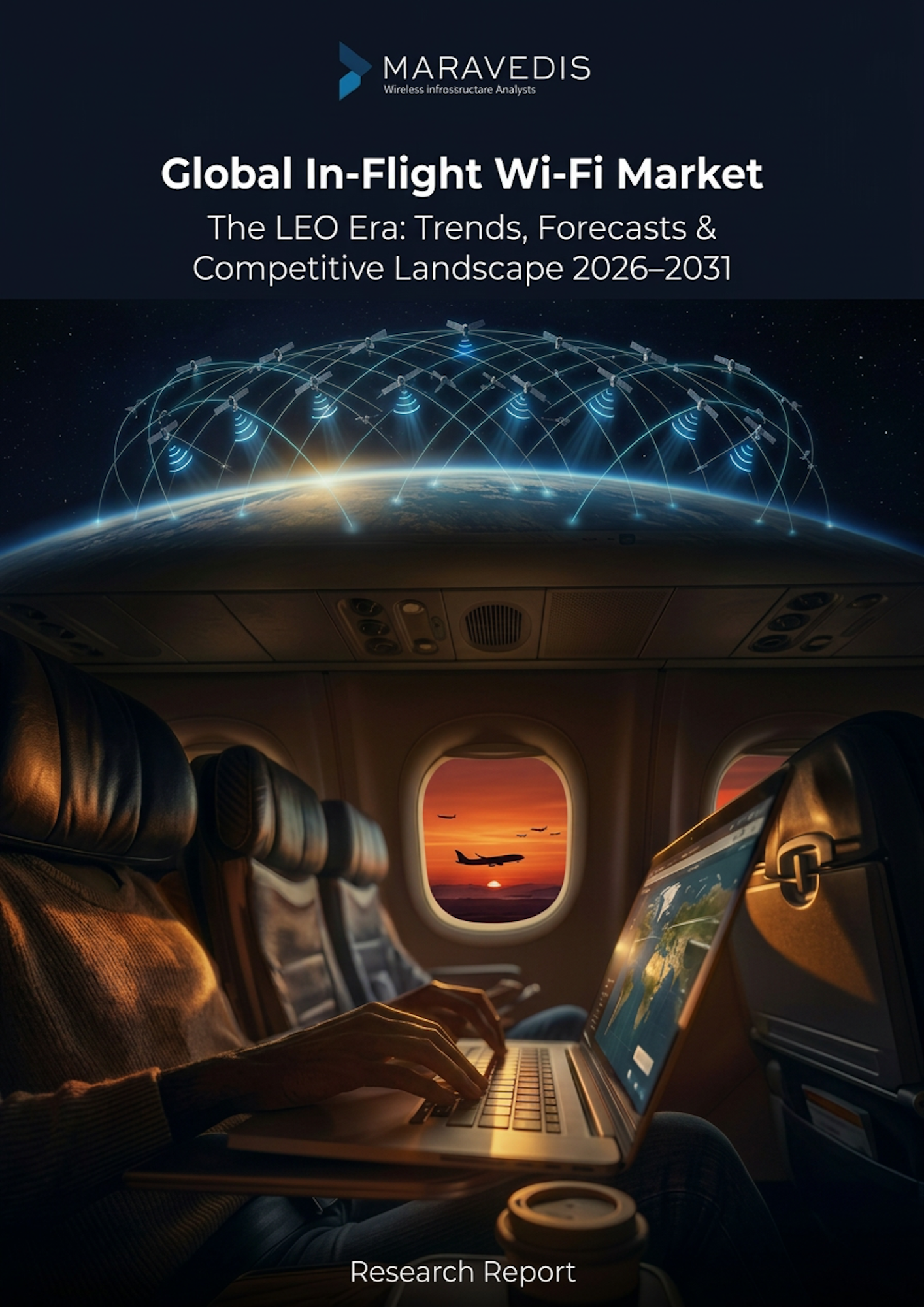
Global In-Flight Wi-Fi Market: The LEO Era: Trends, Forecasts & Competitive Landscape 2026–2031
Global In-Flight Wi-Fi Market: The LEO Era: Trends, Forecasts & Competitive Landscape 2026–2031
Some thing
Some thing
0
0
10% funded
10 backers
Time remaining



Pledge 20% (5$) today!
Couldn't load pickup availability
Why We Need Your Support
Producing the Global In-Flight Wi-Fi Market report requires sustained investment in primary research, competitive intelligence, and analytical modeling across commercial, regional, business, and military aviation segments worldwide. The airline-level deployment data, the provider outreach required to validate technology choices and contract terms carrier by carrier, and the modeling work needed to build credible six-year forecasts across multiple technology layers - LEO, GEO, ATG, and hybrid architectures - represent a significant and recurring cost that cannot be absorbed without committed backing from the industry. This crowdfunding initiative allows organizations that operate in, invest in, or seek to enter the in-flight connectivity market to directly enable the production of rigorous, independent analysis. Backers are not purchasing a generic market sizing exercise; they are funding the primary research, vendor interviews, and proprietary scoring methodology - including the Maravedis Market Score - that makes credible in-flight Wi-Fi intelligence possible at global scale.
The LEO disruption is happening now, at extraordinary speed. Starlink alone signed 21 airline commitments in three months, and the competitive dynamics, pricing models, and regulatory frameworks are shifting faster than any secondary source can track. Without the collective support of industry stakeholders, this research cannot be completed on the timeline the market demands, and decision-makers - from airline procurement teams to IFC investors to MNO strategy leads - are left relying on generic reports that miss the nuance of what is arguably the most consequential shift in aviation connectivity in two decades.
Table of Contents
Executive Summary
- Key Findings at a Glance
- Market Size & Forecast Snapshot
- Top 5 Trends Reshaping the Market
- The Maravedis Analyst Perspective
Chapter 1 — Market Overview, Definitions & Methodology
- 1.1 Scope & What This Report Covers
- 1.2 IFC Defined: Wi-Fi, IFEC & Ancillary Services
- 1.3 Technology Taxonomy: ATG, GEO, MEO, LEO, Hybrid
- 1.4 Aviation Segments: Commercial, Regional, Business, Military
- 1.5 Research Methodology & Data Sources
- 1.6 Why Market Size Estimates Vary Across Research Firms
Chapter 2 — Market Sizing & Forecasts (2026–2031)
- 2.1 Global Market Size & Revenue Forecast
- 2.2 Connected Aircraft Fleet Projections
- 2.3 Regional Revenue Breakdown
- 2.4 Revenue by Business Model: Paid, Free/Loyalty-Sponsored, Bundled
Chapter 3 — The LEO Inflection Point & Technology Deep Dive
- 3.1 Why LEO Changes Everything: Speed, Latency & Economics
- 3.2 Performance History: From Dial-Up ATG to Broadband in the Sky
- 3.3 Satellite Band Comparison: L, Ku, Ka, V-Band
- 3.4 Antenna Technology: Flat-Panel, Phased Array, Multi-Antenna Configs
- 3.5 ATG 5G: Niche or Viable Complement?
- 3.6 Network Management, QoS & Cybersecurity at 35,000 Feet
- 3.7 Remaining Gaps: When Will It Truly Feel Like Your Office Connection?
Chapter 4 — Competitive Landscape: Starlink, Incumbents & New Entrants
- 4.1 Market Structure Overview
- 4.2 Starlink Aviation: The Dominant Force — 34 Airlines and Counting
- 4.3 Flagship Deployments: United, Southwest, Emirates, Qatar, BA, Air France
- 4.4 Ookla Performance Data: Starlink Speeds vs. Competitors
- 4.5 Viasat & Inmarsat: Defending Position Post-Merger
- 4.6 Panasonic Avionics & Thales: The Systems Integrators
- 4.7 Gogo 5G & ATG: Still Relevant for Domestic Routes?
- 4.8 Amazon Kuiper: JetBlue Deal & American Airlines Talks
- 4.9 Chinese LEO Providers: Emerging Threat in Asian Markets
- 4.10 Maravedis Market Score™
Chapter 5 — Airline Strategies, Business Models & Passenger Experience
- 5.1 The Shift from Premium Add-On to Standard Amenity
- 5.2 Free Wi-Fi as Loyalty Currency: The MNO Sponsorship Model
- 5.3 T-Mobile & AT&T: Sponsoring Connectivity at Scale
- 5.4 Maravedis Forecast: Free Wi-Fi the Norm on Major Carriers by 2028–2030
- 5.5 Ancillary Revenue: Advertising, Content & Data Monetization
- 5.6 Passenger Demand: 65%+ Prioritize Wi-Fi When Choosing Flights
- 5.7 Use Cases: Streaming, Video Calls, Gaming, Remote Work
- 5.8 Satisfaction Scores: Airlines Winning and Losing on Connectivity
Chapter 6 — Regional Analysis
- 6.1 North America: The Most Advanced Market
- 6.2 Europe: Regulatory Complexity & Rapid LEO Adoption
- 6.3 Asia-Pacific: Fastest-Growing Region, Chinese LEO Wild Card
- 6.4 Middle East: Gulf Carriers as Performance Leaders
- 6.5 Latin America: Economic Constraints & Satellite Coverage Gaps
- 6.6 Africa & Rest of World: Underserved Opportunity
Chapter 7 — Regulatory, Policy & Investment Landscape
- 7.1 Aviation Authority Approvals for IFC Systems
- 7.2 Spectrum Licensing & International Coordination
- 7.3 Impact of U.S. Tariffs on Avionics Hardware & Supply Chains
- 7.4 Data Privacy Regulations for Airborne Internet Users
- 7.5 Capital Flows into LEO & Aviation Connectivity
- 7.6 Key M&A Activity: Viasat-Inmarsat, SES-Intelsat
- 7.7 Retrofit vs. Line-Fit Economics
Chapter 8 — Maravedis Outlook & Strategic Recommendations
- 8.1 Three Scenarios: Base, Accelerated, Constrained
- 8.2 Strategic Recommendations for Airlines
- 8.3 Strategic Recommendations for IFC Providers
- 8.4 Strategic Recommendations for MNOs & Sponsors
- 8.5 Analyst Watch List: 5 Things to Monitor in 2026–2027
Appendices
- A. Glossary of Terms
- B. Airlines with Active IFC Deployments
- C. Starlink Aviation Airline Commitments Tracker (Q1 2026)
- D. Methodology Notes & Data Disclaimer
- E. About Maravedis Research
🗓️ Production Timeline Estimate
| Milestone | Timeframe |
|---|---|
| Outline finalized & pre-sales open | Week 1–2 |
| Primary research (interviews, surveys) | Weeks 3–5 |
| Draft chapters delivered internally | Weeks 7–9 |
| Review & editing | Weeks 10–11 |
| Publication & delivery to backers | Week 12 |
Estimated total production time: ~3 months
Refund Policy
In the event that Maravedis Research is unable to commence the agreed-upon work described in this invoice, the Client shall be entitled to a refund of ninety-five percent (95%) of the total amount paid. Maravedis Research shall retain five percent (5%) of the total invoiced amount as a non-refundable administrative fee to cover time and upfront costs already incurred, including but not limited to web development (crowdfunding landing page), marketing preparation, and related preliminary expenses. Any applicable refund shall be processed within thirty (30) business days of written confirmation that the work will not proceed.
Notwithstanding the foregoing, no refund of any amount shall be issued if the Client withdraws funding, in whole or in part, for the purpose of directing or reallocating such funds toward a competing or substantially similar study, research initiative, or publication. In such circumstances, all amounts paid shall be deemed fully earned and non-refundable.